

DOES MGO BOARD CONTAIN ASBESTOS, FORMALDEHYDE OR TOXIC GLUE?
Many builders, fire door manufacturers, distributors, and project contractors ask the same questions when they first encounter MgO boards:
- Does MgO board contain asbestos?
- Is there toxic glue inside?
- Does it release formaldehyde?
- Is it safe for indoor applications?
These are important questions because building materials directly affect indoor air quality, occupant comfort, and long-term safety. In this article, we'll answer the most common concerns about magnesium oxide boards and explain what they are actually made of.
What Many People Think vs. What MgO Board Actually Contains
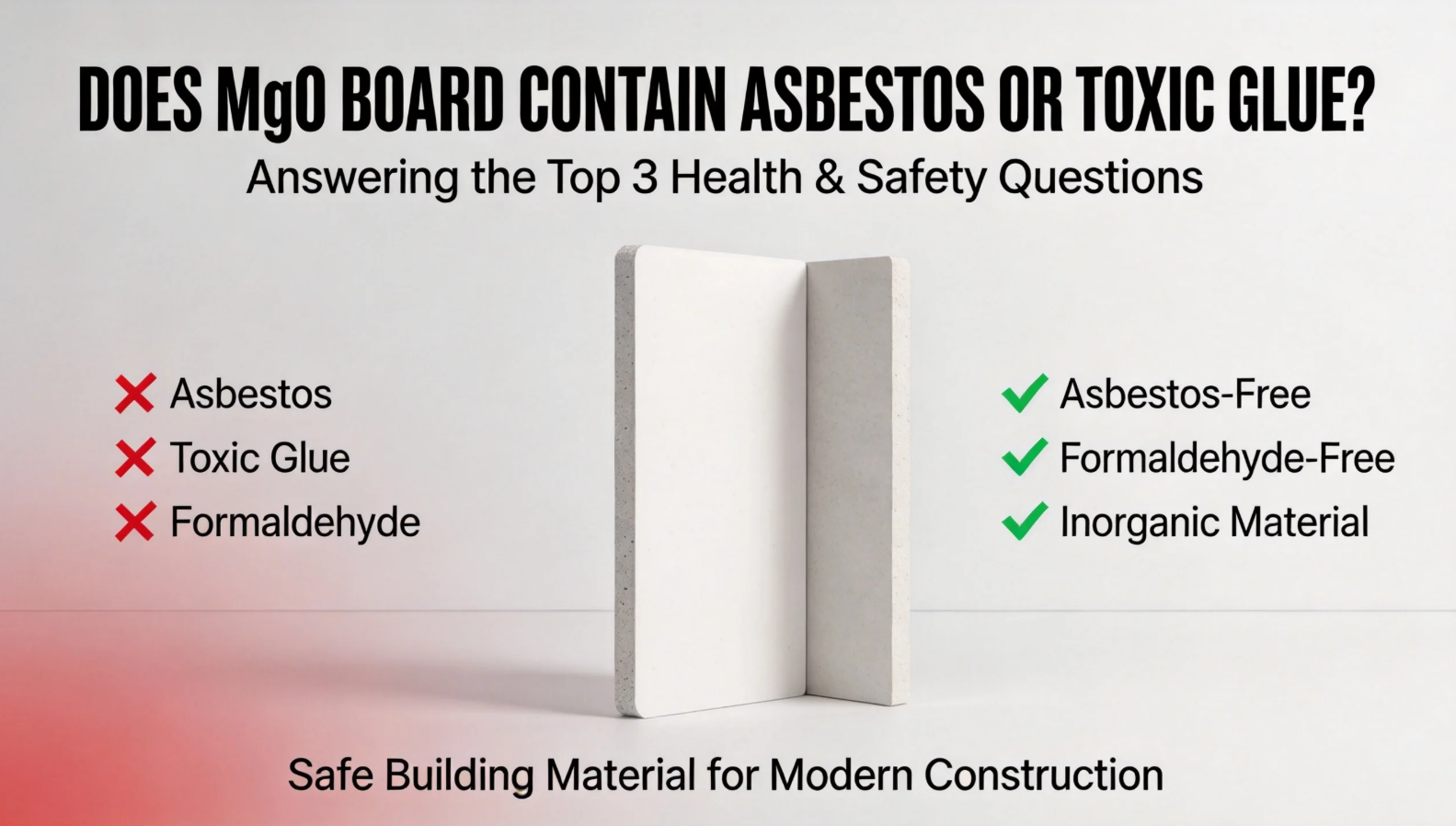
Question 1: Does MgO Board Contain Asbestos?
Short Answer: No.
Modern MgO boards do not contain asbestos. High-quality MgO boards intended for international markets are manufactured using mineral-based materials and reinforcing fibers without requiring asbestos in the production process.
Asbestos was historically used in some construction materials decades ago, but it is not a necessary ingredient in modern magnesium oxide board manufacturing.
Question 2: Does MgO Board Contain Toxic Glue or Formaldehyde?
Short Answer: No.
Unlike plywood, particle board, MDF, or some laminated products, MgO boards are bonded through a mineral reaction rather than formaldehyde-based synthetic adhesives.
Because no urea-formaldehyde resin is required, MgO boards can offer advantages for projects where indoor air quality is an important consideration.
- ✔ No urea-formaldehyde glue
- ✔ No asbestos
- ✔ Low VOC emissions
- ✔ Suitable for indoor applications
- ✔ Inorganic mineral-based composition
What Is MgO Board Made Of?
Understanding the raw materials helps explain why MgO boards differ from many traditional wood-based panels.
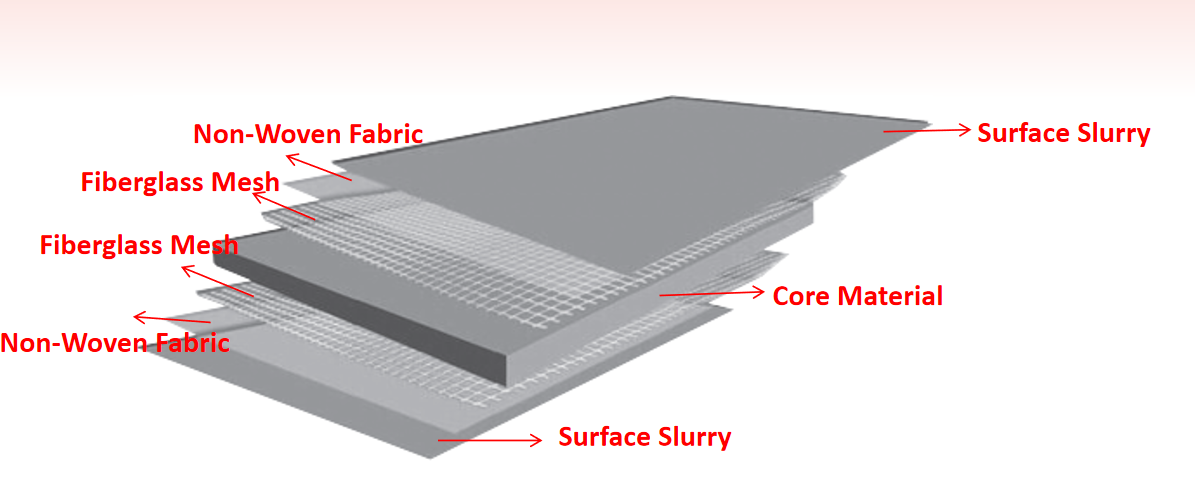
- Magnesium Oxide (MgO)
- Magnesium Sulfate or Magnesium Chloride Solution
- Fiberglass Mesh Reinforcement
- Wood Fiber
- Non-Woven Fabric
- Performance Additives
The board structure relies primarily on mineral materials and reinforcement layers rather than organic resin adhesives.
Question 3: Is MgO Board Safe for Homes, Schools and Hospitals?
Short Answer: Yes.
Because MgO boards are inorganic and non-combustible, they are widely used in a variety of building applications where fire performance and indoor environmental considerations are important.
- Residential buildings
- Commercial projects
- Schools and educational facilities
- Hospitals and healthcare buildings
- Fire-rated doors
- Partition systems
- Clean rooms
Conclusion
If you are evaluating building materials from a health and safety perspective, MgO boards offer several advantages:
- ✔ Asbestos-Free
- ✔ Formaldehyde-Free
- ✔ No Toxic Glue Required
- ✔ Low VOC Emissions
- ✔ Non-Combustible
- ✔ Suitable for Indoor Applications
At OUSHIBAO, our MgO boards are manufactured using carefully selected raw materials and undergo strict quality control to ensure consistent quality and reliable performance.
Learn More About Our MgO Board Solutions
Discover our fire-rated, partition wall, and flooring board products for commercial and residential applications.
View Products